
Indian Pharma Exports May Face Disruptions Amid West Asia Tensions
Industry News | India Pharma Landscape
Description:
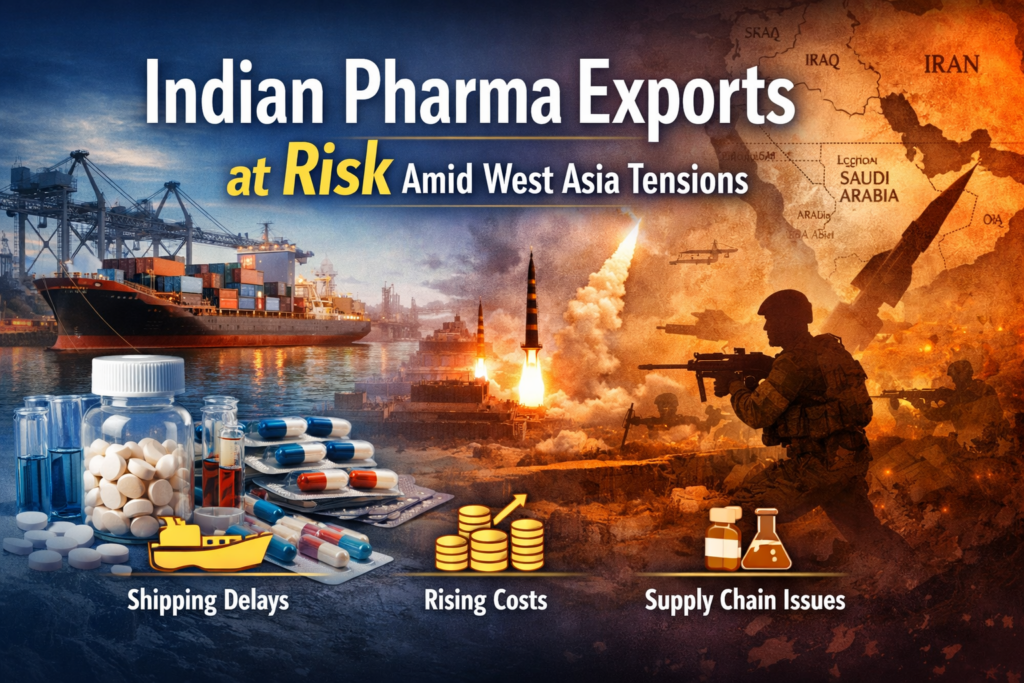
Escalating tensions in West Asia may impact Indian pharmaceutical exports, with industry experts warning of possible shipment delays, increased freight costs, and supply chain disruptions.
Growing Concerns for India’s Pharma Export Sector
India’s pharmaceutical industry, known globally for supplying affordable medicines, may experience logistical challenges due to the evolving geopolitical situation in West Asia. Industry experts and export bodies have indicated that ongoing tensions in the region could potentially affect shipping routes, freight costs, and the overall supply chain linked to pharmaceutical exports.
Preliminary industry estimates suggest that Indian pharmaceutical exports could face potential disruptions valued at up to ₹5,000 crore if trade routes remain affected for an extended period. While these estimates are precautionary in nature, they highlight the importance of stable international shipping routes for maintaining uninterrupted medicine supply across global markets.
India is currently one of the world’s largest exporters of generic medicines, supplying pharmaceutical products to more than 200 countries. West Asia remains an important destination for Indian medicines and also serves as a major transit corridor for shipments to Europe and Africa.
Importance of West Asia for Indian Pharma Trade
Countries in the West Asian region, including members of the Gulf Cooperation Council (GCC), represent a significant market for Indian pharmaceutical products. These markets depend heavily on imported medicines, particularly generic drugs, vaccines, and healthcare supplies manufactured in India.
Apart from direct exports, many pharmaceutical shipments pass through maritime routes in this region before reaching other international markets. As a result, any disruption in these shipping routes can indirectly affect trade flows to multiple regions.
Industry analysts note that the Red Sea and nearby maritime routes are crucial corridors for global trade. Changes in shipping patterns or precautionary rerouting of cargo vessels may increase transit time for pharmaceutical shipments.
Logistics and Freight Cost Challenges
Exporters have also reported rising logistics costs linked to the current uncertainty in shipping routes. Freight charges and insurance premiums for cargo shipments are witnessing fluctuations due to precautionary measures taken by shipping companies.
For pharmaceutical exporters, logistics plays a critical role because many medicines require temperature-controlled transport and timely delivery. Even minor delays can affect supply schedules in international markets.
If shipping routes are rerouted or transit times increase, exporters may need to explore alternative logistics strategies to ensure uninterrupted medicine delivery.
Industry Monitoring the Situation
Industry organizations and export promotion bodies are closely monitoring developments in the region. Exporters are also maintaining regular coordination with logistics partners and regulatory authorities to ensure supply continuity.
Government departments responsible for commerce and trade are aware of the situation and continue to engage with exporters to assess potential impacts on various sectors, including pharmaceuticals.
At present, pharmaceutical exports from India continue to operate normally, although companies remain cautious and are preparing contingency plans if logistical challenges intensify.
Strong Global Position of Indian Pharma
Despite potential challenges, experts remain confident about the resilience of India’s pharmaceutical sector. The country’s strong manufacturing base, diversified export markets, and robust regulatory framework allow the industry to adapt to global disruptions more effectively.
India continues to play a vital role in the global healthcare ecosystem by providing affordable and high-quality medicines. Industry stakeholders believe that through coordination between exporters, logistics providers, and policymakers, the sector can manage short-term uncertainties while maintaining its commitment to global medicine supply.