
Centre Bans High-Dose Nimesulide Formulations to Strengthen Patient Safety
Regulatory & Policy Updates | India Pharma Landscape
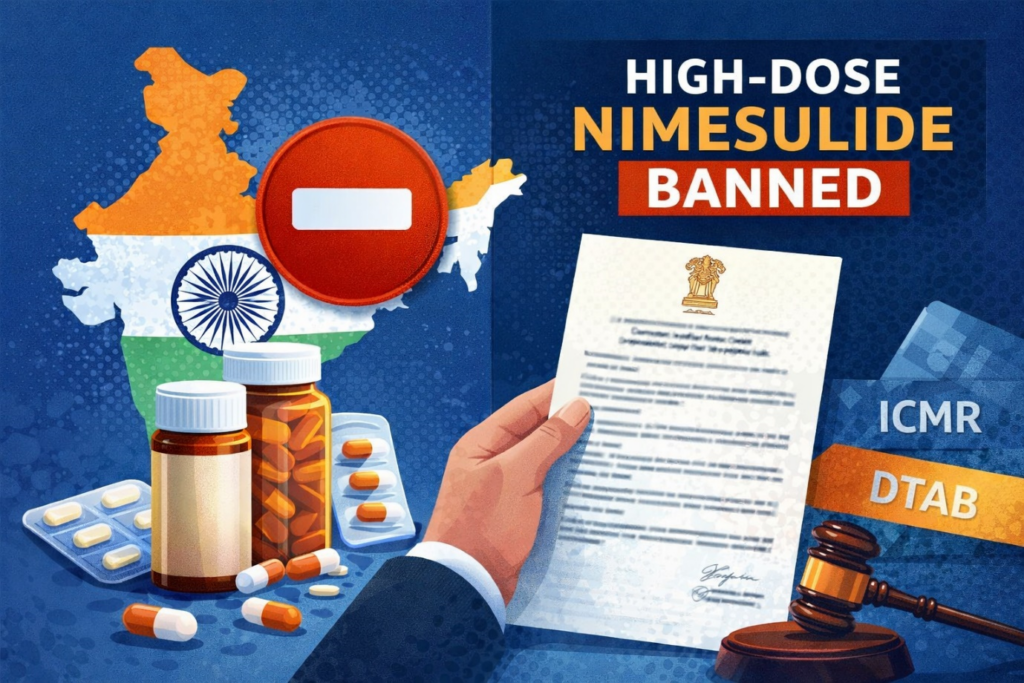
In a significant regulatory move aimed at strengthening patient safety, the Ministry of Health and Family Welfare (MoHFW) has prohibited the manufacture, sale, and distribution of all oral immediate-release formulations of nimesulide above 100 mg for human use, with immediate effect.
The ban has been notified under Section 26A of the Drugs and Cosmetics Act, 1940, following recommendations of the Drugs Technical Advisory Board (DTAB) and a detailed scientific review conducted by the Indian Council of Medical Research (ICMR). The government stated that higher-strength immediate-release formulations of nimesulide pose potential risks to human health and that safer therapeutic alternatives are readily available.
Restricted Clinical Use & Safety Concerns
DTAB has emphasized that nimesulide should be prescribed strictly as a second-line NSAID, only after failure of first-line options. The expert panel also reiterated that the drug must not be used in:
- Pregnant and lactating women
- Women planning pregnancy
- Patients with hepatic or renal impairment
- Patients receiving other hepatotoxic or nephrotoxic medicines
The Board has further requested ICMR to conduct systematic age-wise safety reviews, particularly for populations below 12 years, adolescents (12–18 years), and elderly patients above 60 years.
Complete Ban on Veterinary Use Reinforced
In parallel, the Central Drugs Standard Control Organization (CDSCO) has reiterated a complete prohibition on nimesulide and its formulations for animal use, citing serious ecological and animal safety concerns.
The directive follows observations by the Delhi High Court and evidence submitted by organizations such as the Bombay Natural History Society (BNHS) and Indian Veterinary Research Institute (IVRI). Studies confirmed that veterinary use of nimesulide causes acute renal failure and visceral gout in vultures, leading to rapid mortality.
State and UT Drug Controllers have been instructed to:
- Ensure strict regulatory surveillance
- Prevent illegal manufacture or relabelling
- Submit compliance and enforcement reports to the central authority
Industry Impact & Compliance Advisory
The ban is expected to impact pharmaceutical manufacturers producing fixed-dose combinations and high-strength nimesulide formulations, requiring:
- Immediate portfolio review
- Withdrawal and destruction of prohibited stock
- Labeling and regulatory compliance audits
Industry experts believe the move reinforces India’s commitment to evidence-based regulation, pharmacovigilance, and environmental protection, while aligning domestic policy with global safety standards.
Pharma Parivesh Insight
“This decision marks a decisive shift towards risk-based drug regulation in India, balancing therapeutic utility with patient and environmental safety.”